“It can reach a point where it becomes unbearable,” said Dr. Donny Suh. “Which was the case for me.”
Dr. Suh, a pediatric ophthalmologist with 25 years of experience, began feeling the strain early in his career. “The physical strain on our body is tremendous,” he said. What began as fatigue in his 30s progressed to severe neck pain. “I was actually having severe neck pain. And then some of my colleagues were retiring in their early 50s. And I realized, you know what, maybe it’s just time for me to retire, because this pain was unbearable.”
He pursued the usual remedies. “I was taking medications to improve the pain, and also I was getting massage, and I was getting various physical therapy, and I was working out. But none of it was really helping.” The culture around him discouraged complaint. “This is a surgeon’s mentality. They think of pain as kind of like a badge of honor. I was trained, and I grew up in an era where pain is good. You don’t complain. We tend not to verbalize our discomfort or any type of weaknesses.”
Across specialties, similar accounts surfaced.
The breaking point
For Dr. Suh, the thought of leaving surgery was not about burnout. “I love work. It’s not that I didn’t like work. It’s just that I couldn’t do it because I was in pain.” As the symptoms intensified, the possibility of retirement became real. “I realized, you know what, I may have to quit.”
After 28 years in surgery, he described the accumulation of strain as “a stark wake-up call.” “The constant pain in my neck, shoulders, and back, exacerbated by repetitive surgeries, was becoming unbearable.”
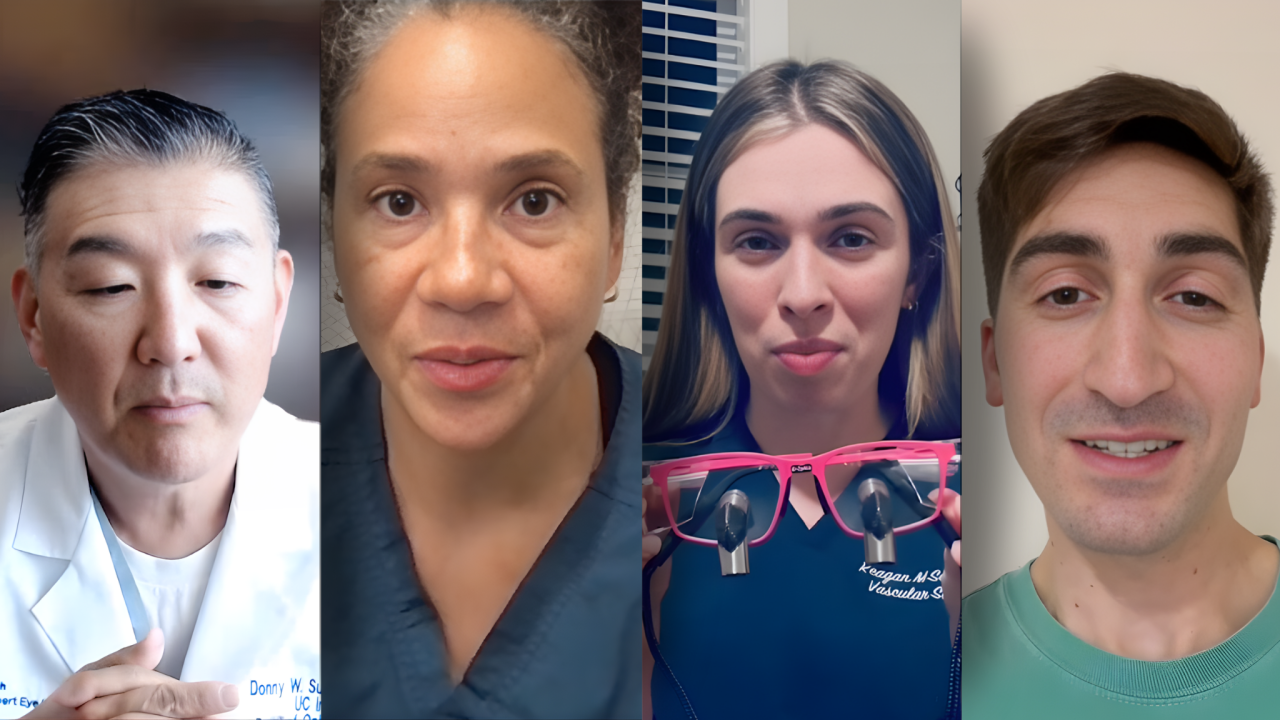
Dr. Rebecca Williams, an endocrine surgeon performing thyroid and parathyroid operations several days per week, described persistent symptoms despite adjustments. “I was having significant cervical spine pain despite having my loupes adjusted for the maximum angle of declination. I was also having pain on the bridge of my nose due to the weight of the loupes.”
The pattern was consistent: cervical strain, anterior load, progressive discomfort.
The 100-year design problem
In searching for answers, Dr. Suh examined the tools themselves. “The standard surgical loupes just wasn’t designed with a surgeon in mind,” he said. “It was functional. It was just something that just got the job done.” He noted that the basic loupe architecture dates back to the late 1800s. “The basic design of the surgical loupes hasn’t changed. Ergonomics was not part of the thought process when they were building these surgical loupes.”
The geometry, he explained, compels forward flexion. “It doesn’t matter how much you decrease the declination angle. You have no choice but to bend your back 30 to 40 degrees.” Surgeons operating on small structures must close the distance to the field. “You have to get close to what you’re looking at.”
From a spine perspective, Dr. Pouya Hemmati described the same dynamic. Looking over traditional telescopes, he said, “requires hyperflexion of the neck and results in the highest strain on the cervical spine.”
The issue was not discipline or conditioning. It was angle and load.
A surgeon-driven redesign
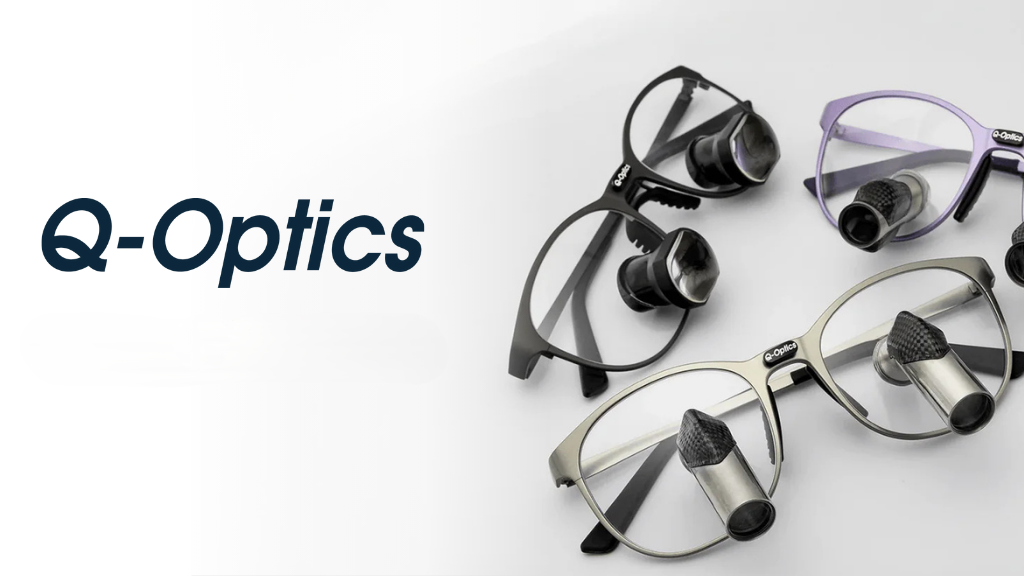
“We contacted all the companies,” Dr. Suh recalled. “Q-Optics was actually the company that was most receptive.” Unlike others, he said, “they were listening to what we were complaining about.” He described the company as “very surgeon-focused,” adding that they sought input rather than dictating design.
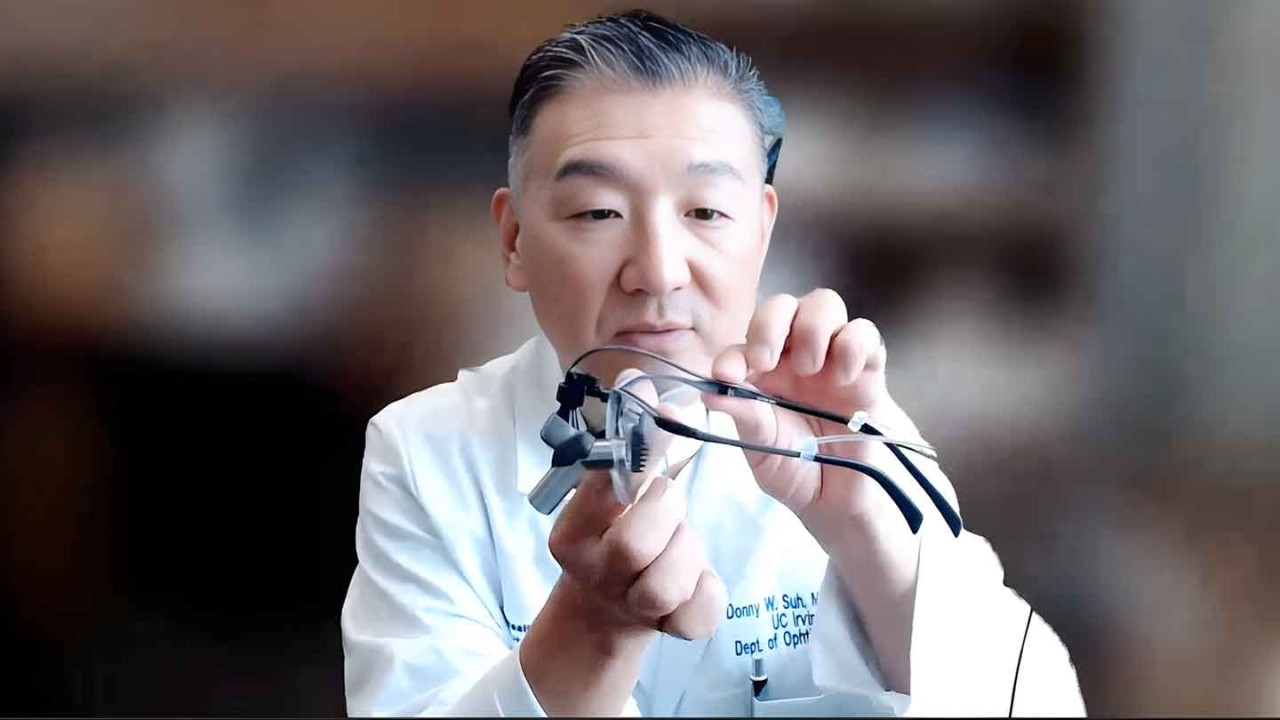
When he first evaluated the ERGO platform, the change was mechanical. Instead of requiring the surgeon to bend toward the field, the optical path was deflected downward through angled prisms, allowing the head and neck to remain neutral.
“Once I realized how it worked, I was hooked,” he said.
The mechanical shift
The difference was measurable in posture. “My posture improved from 30 degrees to virtually 0 degrees. It corrected my back posture completely. I felt like I found a new career.”
Dr. Hemmati noted that the angled telescopes “allow you to keep your neck straight and minimize neck flexion,” while still permitting surgeons to “look below the telescopes to get a non-magnified view.” That distinction addresses a common ergonomic hazard: looking over loupes forces hyperflexion.
For Dr. Rebecca Williams, the adaptation period was brief. “By my second day operating, I was totally acclimated, and I was already noticing the physical benefits.” The outcome was practical. “I leave the operating room without the pain I was experiencing using direct vision loupes.”
The weight factor
Angle alone did not account for years of strain. Traditional loupes, Dr. Suh explained, are “very front-heavy.” “You’re putting all that weight in the front of your face, so that almost forces you to lean forward. And that’s what stresses your back.”
The Q-Optics configuration redistributed that load. Dr. Suh described it as “lightened the load,” with weight spread across the head rather than concentrated at the nasal bridge and anterior cervical spine.
Dr. Rebecca Williams noticed the difference immediately. “One of the things I noticed immediately … is how much lighter they were than my previous frames. Even with the frame-mounted headlamp, I had no issues with pain on the bridge of my nose.”
Cardiothoracic surgeon Dr. Steven Etoch observed, “The light weight is the best part. The optics are incredible considering the small size and weight. No cumbersome headlight.”
Dr. Matthew Sussman reported, “I have had no neck pain and am astonished.”
Clinical proof under magnification
For surgeons, ergonomic improvement must not compromise visualization.
Dr. Rebecca Williams described dissecting cancer off the recurrent laryngeal nerve. “I had the operating microscope brought in to see if that would improve my visualization,” she said. After comparison, she concluded that “the view was not significantly better, and the flexibility of being able to move freely with my loupes was more of an advantage than the slight increase in magnification.”
Plastic surgeon Dr. Chaowen Wu, who uses 4.0x and 4.5x magnification for facelifts, described the optics as providing “a crisp field of view.”
For Dr. Suh, the implication was clear. “There’s no way that I could tackle these difficult cases without these loupes.”
Changing the culture
Surgeons are often resistant to altering tools long embedded in training. “The surgeons … are very resistant to change,” Dr. Suh acknowledged. Residents “do what the attendings do.”
Yet several now actively recommend ergonomic designs to trainees.
“I’m constantly telling young residents to try to push for these versus other options because of the weight, the quality, and the comfort,” said Dr. Avra S. Laarakker. “We need quality lights with lightweight, quality loupes to minimize the injury and strain to our neck so we can have long fruitful careers.”
After three decades in practice, Dr. Robert J. Sinard described them as “my top recommendation for my residents.”
For Dr. Suh, the shift reframed the issue entirely. Chronic pain, once treated as an individual failing or inevitability, became a design problem with a design solution.
“If it wasn’t for these loupes, I’d be on the golf course right now,” he said. “I love work. It’s just that I couldn’t do it because I was in pain.”
He concluded without hesitation: “I really would not be sitting here talking to you right now if it wasn’t for these loupes.”
Continue the discussion
To explore the ergonomic loupe options referenced in this article, visit Q-Optics on CSurgeries for additional surgeon testimonials, technical specifications, and clinical perspectives.
Readers interested in a deeper examination of surgical ergonomics can also attend the upcoming virtual webinar, Solving the Surgeon’s Posture Problem: Loupe Choice & Other Strategies for Long-Term Musculoskeletal Health, taking place March 31, 2026, from 7–8 PM EST. Presented in partnership with Q-Optics, the session features Dr. Geeta Lal, endocrine surgeon and founder of Surgical Ergonomics, who will discuss the scope and drivers of musculoskeletal strain in surgery and practical strategies to support long-term musculoskeletal health.
Registration details will be announced soon. Stay tuned.